
Can You Put Bollards on Your Bristol Drive? (Council Rules Explained)
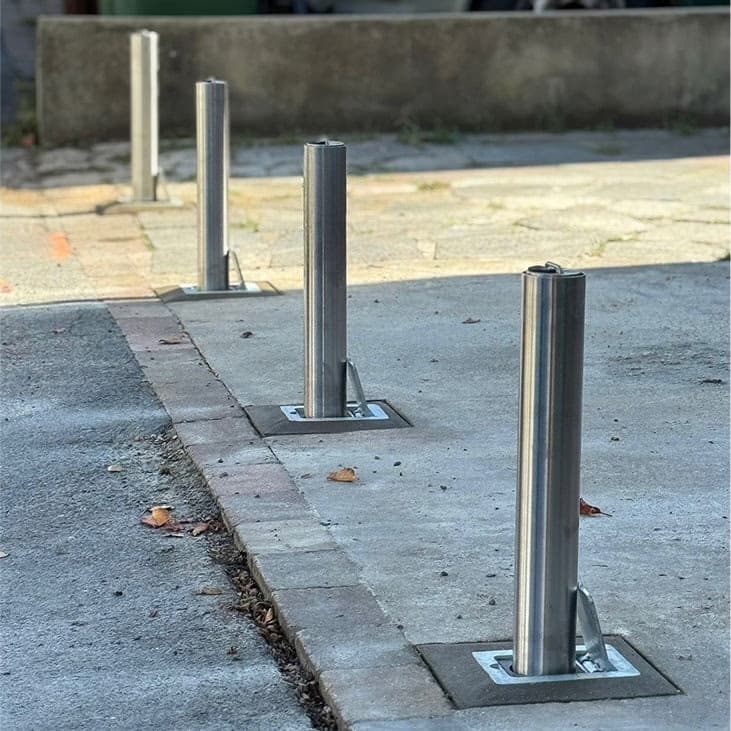
Short version:If the bollards are on your private property (inside your boundary line), you don't need Bristol City Council permission for most domestic driveways. The exceptions are listed buildings, conservation areas (Clifton, Redland, Kingsdown, etc.), and any installation on or affecting the public highway. Most Bristol jobs we do never need council involvement.
The Three Questions That Determine Whether You Need Permission
1. Is the bollard on your property or the pavement?
The pavement (footway) in front of your house belongs to the council, not you. Anything fixed permanently into the pavement needs a highway licence from Bristol City Council — not impossible, but it's an application, a fee, and a wait. Most Bristol customers install just inside their property line so this is a non-issue. Your boundary is typically the back edge of the kerb or the front edge of your block paving.
2. Is your house in a conservation area or listed?
Bristol has several large conservation areas where external alterations need council approval — including:
- Clifton (BS8)
- Redland and Cotham (BS6)
- Kingsdown (BS2)
- Bedminster (parts of BS3)
- Bishopston, Hotwells, and others
If you're in one of these and your property is listed, you'll need to apply for Listed Building Consent before any visible external alterations. For bollards specifically: retractable telescopic posts that sit flush with the drive when down are usually accepted because they have minimal visual impact when lowered. Fixed bollards are harder to get through conservation officers.
Bristol City Council's planning portal lets you check if your property is listed or in a conservation area in 30 seconds — search your address at planningonline.bristol.gov.uk.
3. Are you blocking access to a public footpath or right of way?
If your bollard installation would obstruct a public right of way that crosses your land (some older Bristol properties have these), you can't install. This is uncommon for modern drives but worth checking the title deeds if you're uncertain.
What Bristol City Council Actually Says
Bristol City Council's planning department treats domestic driveway bollards as “permitted development” in most cases when:
- Installed entirely within your private property curtilage
- Less than 1 metre tall (our Vanguard Prime is 750mm — well under the limit)
- Not affecting a listed structure
- Not in a conservation area visible street scene
If your install meets all four, you don't need to tell the council anything. Just fit them.
The Conservation Area Workaround
For Clifton, Redland, Cotham customers — we've done jobs across all these BS6/BS8 conservation areas. Here's the practical playbook:
- Choose telescopic, not fixed. When down, telescopic posts are flush with the paving and invisible from the street. Conservation officers generally have no objection.
- Stainless steel or brushed finish. Don't pick bright yellow or red posts. The Vanguard Prime stainless finish reads as discreet, contemporary, and acceptable in most conservation contexts.
- Email the planning department first. A two-line email saying “I'm planning to fit two retractable telescopic bollards within my property line at [address] — are there any concerns?” often gets a one-line “no objection” reply you can keep on file.
- Document everything. Keep your install photos, invoice, and any council correspondence in case it ever comes up at house sale or insurance renewal.
If You're On a Shared Drive
Common in Bristol's Victorian semi-detached terraces (Bishopston, Horfield, parts of Redland). You'll need your neighbour's written consent if the bollard sits on or affects shared property. This is a civil matter, not a council one — but documenting consent in writing protects you if relations sour later.
What Happens If You Install Without Permission and Should Have Asked?
In a conservation area: the council can serve an enforcement notice requiring removal. In practice this is rare for discreet retractable posts and usually only triggered by a neighbour complaint. Worst case: remove the bollards (we can do this) and reapply through proper channels.
For non-conservation domestic properties, there's effectively no enforcement risk.
The Short Decision Tree
- Inside your property line + not listed + not in conservation area: No permission needed. Just install.
- Conservation area (BS8, BS6, BS2 etc.): Email planning first. Telescopic only. Usually fine.
- Listed building: Apply for Listed Building Consent. Allow 8–12 weeks.
- On the pavement / public highway: Highway licence required from Bristol City Council.
- Shared driveway: Written neighbour consent before install.
When we quote your job, we'll flag if any of the above applies to your address. 9 times out of 10 in Bristol it doesn't — the install just happens.
More Bristol bollard guides
Worried About Council Rules? We'll Tell You Up Front.
Send us your Bristol postcode and we'll check whether your address is listed, in a conservation area, or has any planning constraints — before you're committed to anything. No charge, no obligation.